
Mutants Genetic Gladiators
Celsius onlineAction
3.921.31K Reviews
- Version
- 76.802.172880
- Installs
- 10.00M
- Age Rating
- Teen
Screenshots
Our Review of Mutants Genetic Gladiators
 Analysis by Appyee
I approached Mutants Genetic Gladiators as the kind of mobile action game that asks a simple question: do I want quick battles built around long-term team building, or do I want a more immediate, reflex-driven experience? After spending time with it, I found that its appeal is less about one spectacular fight and more about the decisions made before each match. Breeding, training, and arranging mutants gives the game a planning layer that changes how I look at every battle.
That makes it a better fit for players who enjoy collecting creatures, testing combinations, and gradually improving a roster than for someone searching for a pure arcade game. It is free to start, rated Teen, and developed by Celsius online. The game has been available since April 16, 2014, so it has had plenty of time to establish its particular blend of action and team management.
My recommendation depends on what you value in a mobile game. If you like checking in, making a few strategic choices, and watching a team become more capable, there is a lot here to explore. If you dislike progression systems that can feel repetitive or prefer a complete premium experience without optional spending, I would be more cautious.
What to consider before building your mutant team
I find it helpful to settle on a goal before I start adding mutants to my roster: am I trying to shore up a weak matchup, or just curious about a new combination? That small distinction keeps team building from turning into aimless collecting and gives each training choice a purpose. Once I know what I want the lineup to do, I can judge new additions by whether they genuinely improve it.
The real decision is strategy versus instant action
The word “action” can create the expectation of constant movement and fast reactions. This game approaches action differently. The excitement comes from assembling a group that works well together, choosing suitable fighters, and understanding how your preparation affects the outcome. The battle is only one part of the experience; the roster behind it matters just as much.
I found that distinction important when deciding whether to continue playing. A player who wants short, uncomplicated matches may enjoy the accessible format at first but eventually want more direct control. Someone who likes comparing units and adjusting a lineup will probably find more reasons to return. The game rewards attention to team composition rather than relying only on quick fingers.
Before installing it, I would ask myself whether I enjoy games where progress is made in small steps. You may spend one session training, another experimenting with a different group, and another returning to a fight that previously caused trouble. That rhythm is central to the experience. It is not a side detail that can be ignored while rushing from one battle to the next.
How the collection loop affects everyday play
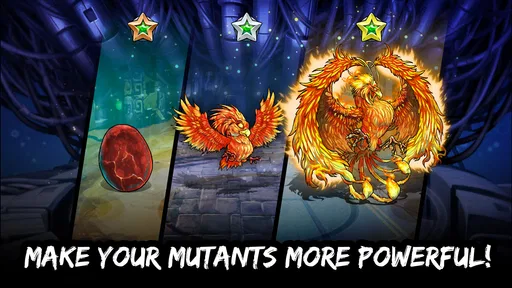
The mutant system gives the game a clear identity. Instead of treating every match as an isolated event, I was encouraged to think about which creatures deserved attention and how a stronger group might be formed. Breeding and training are not merely decorative activities; they give me reasons to care about the roster between battles.
A useful way to play is to avoid upgrading everything at once. I get more value from choosing a small core team, learning what each member contributes, and then improving the weaknesses that repeatedly cost me matches. Spreading resources across too many mutants can make progress feel thin. Concentrating on a dependable group creates a clearer sense of direction, even when the game offers many possible combinations.
Another practical habit is to treat failed battles as information rather than as a signal to spend immediately. When a lineup underperforms, I look at whether the problem is poor balance, insufficient training, or simply a bad matchup. That approach makes the game feel more strategic and reduces the temptation to solve every obstacle with an in-app purchase.
The importance of patience and routine
This is a game that works well in a routine. I can open it when I have a short break, review my team, make a training decision, and play a few battles without needing a long uninterrupted session. That makes it suitable for commuting, waiting rooms, or a quiet evening when I want something more involved than a one-minute puzzle but less demanding than a console-style campaign.
The trade-off is that the same routine can become predictable. If I am not interested in improving a roster over time, the repeated cycle of preparing, fighting, and strengthening may start to feel like maintenance. The game’s most enjoyable moments come when I am actively testing an idea. Without that curiosity, the progression loop has less impact.
For that reason, I would not describe it as a universal casual game. It is easy to begin, but enjoying it for longer requires accepting its slower form of momentum. The best sessions are not necessarily the ones with the most battles; they are the ones where I discover why a team works or why it does not.
What the audience figures suggest, without deciding for you
The game has a 3.9 average from around 586 thousand ratings, with more than 21 thousand written reviews and over 10 million installs. I read those numbers as evidence of a broad audience rather than proof that every player will enjoy it. A large player base can make a game easier to discover, but personal fit still comes down to tolerance for collection, training, and optional purchases.
It is also worth checking device compatibility before committing to a long-term save. The current version is 76.802.172880 and requires Android 8.0 or later. That is a practical point for anyone using an older phone or tablet. The game is free to download, but the presence of optional purchases means “free” should be understood as a way to start playing, not necessarily a promise that every route through progression will feel equally quick.
Where the combat loop wins
The strongest part of the design is the connection between preparation and battle. When I change the team, the next fight feels different because I am not simply swapping cosmetic characters. I am testing a theory about how my mutants should work together. That makes even familiar encounters more interesting than they would be in a game where the best choice is always the highest-level unit.
I also like that the collection layer gives losses a useful aftereffect. A defeat can point me toward a training goal or a roster change instead of ending the session entirely. This is one of the game’s less obvious strengths: it turns a failed match into a planning prompt. Players who enjoy tinkering can get more satisfaction from that process than from winning every battle easily.
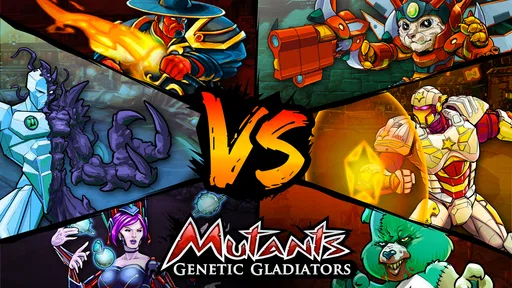
The visual idea of genetically distinct gladiators also helps the game stand apart from ordinary fantasy teams. Its tone is more unusual than a standard group of knights, soldiers, or colorful animals. That oddness will not appeal to everyone, but I found it memorable and well suited to a game about combining different creatures into a fighting roster.
Small habits that make progression less frustrating
I recommend keeping notes mentally, or even using a simple personal list, of which mutants perform well in specific situations. The game encourages experimentation, and it is easy to forget why a particular combination succeeded. Remembering those patterns saves time when a later challenge calls for a similar approach.
I would also avoid treating every new mutant as an automatic replacement for an established team member. New additions are exciting, but a familiar fighter with focused training may be more useful than an untested newcomer. The better question is not “is this mutant newer?” but “does this mutant solve a problem my current group has?”
Finally, I would set a personal spending boundary before making purchases. The listed in-app purchase range runs from $0.99 to $144.99 per item. That is a wide enough range for players to be deliberate. I can enjoy the free starting point while deciding whether convenience is worth paying for, but I would not make that decision in the middle of frustration after a difficult loss.
Where other types of games may fit better
If your priority is hands-on combat, a traditional action game with direct movement and attack controls may be a better choice. This title’s action is tied closely to roster decisions, so it may feel indirect to someone who wants every outcome to depend on timing, aiming, dodging, or combo execution.
Players who prefer a purely collectible experience may also find alternatives more satisfying if they want the collection itself to be the main event. Here, collecting has a practical purpose: it feeds into team building and battles. The roster is not just a gallery. That is a strength for strategists, but it may be less appealing to someone who wants a relaxed catalog of characters without much optimization.
On the other hand, people searching for a competitive team-building game should understand the cost of switching between different options in this category. Learning a new roster system takes time, and the habits that work in one game may not transfer neatly to another. Mutants Genetic Gladiators is worth choosing when you like its specific creature-breeding theme and its gradual development loop, not simply because it belongs to the broad action label.
Who should skip it
I would skip this game if I know I lose interest when progress depends on repeated training. I would also look elsewhere if I want a one-time purchase with a clearly finished structure, or if optional spending makes me uncomfortable even when it is not required to begin. The free entry is convenient, but the surrounding purchase model is part of the decision and should not be treated as an afterthought.
It may not be ideal for very young players either, since its content rating is Teen. Parents should consider that rating alongside the battle-focused theme and the possibility of in-app purchases. For older players, the rating is simply useful context; it does not change the central question of whether the strategic collection loop sounds enjoyable.
The cost of moving from curiosity to commitment
Installing the game costs nothing, so the initial commitment is low. The more meaningful cost is time. To appreciate the system, I need to learn the role of my mutants, notice which teams are dependable, and accept that improvement may come through several modest adjustments rather than one dramatic unlock.
There is also a mental cost to switching from a casual battle mindset to a management mindset. I cannot always expect the next victory to come from playing faster. Sometimes I need to stop, reconsider the lineup, and train with a specific weakness in mind. That extra layer is exactly why the game can hold my attention, but it is also why it can feel slower than a straightforward action alternative.
Spending creates another choice. Purchases may make the route forward feel more convenient, but I would first test whether the free progression loop itself is enjoyable. If I do not like the basic cycle before spending, buying something is unlikely to fix the underlying mismatch. If I do like it, a strict budget helps keep convenience from replacing strategy.
A realistic way to use it during a busy day
Imagine having fifteen minutes between appointments. I would use that time to check the team I have been developing, select a battle that matches its current strengths, and make one focused training decision afterward. I would not try to rebuild the entire roster in that short session. The game works better when a small amount of attention produces one clear experiment.
On a longer evening, I might compare two lineups and revisit a fight that exposed a weakness. That is where the game becomes more absorbing: the short session keeps the routine alive, while the longer session lets me investigate the reasons behind a result. The same account can therefore serve two different moods, provided I am comfortable with gradual progress.
My recommendation for Android players
I recommend Mutants Genetic Gladiators to Android players who want a free action game with a strong team-building backbone. Its best qualities are the unusual mutant theme, the connection between breeding, training, and combat, and the way a loss can lead to a useful roster decision. I especially see its appeal for players who enjoy experimenting rather than simply chasing the fastest possible win.
I would recommend trying it without spending first. Give the basic loop enough time to answer the important question: do you enjoy building a team even when progress is incremental? If the answer is yes, the game can become a satisfying long-term project. If the answer is no, a more direct action title or a premium game with less ongoing management will probably suit you better.
In my experience, the game earns its place through planning rather than spectacle. It is not the right pick for every action fan, but it has a clear personality and a useful strategic rhythm. Choose it for the pleasure of developing a mutant roster, not merely for the promise of quick fights. That expectation leads to a much fairer and more enjoyable first impression.
For me, the final decision is straightforward: try it if collection, training, and tactical team choices sound like entertainment rather than chores. Keep your spending controlled, focus on a core group, and use defeats to adjust your approach. With those expectations, Celsius online’s game offers a distinctive mobile experience that is easy to start and rewarding for the right kind of patient player.
Verdict
Strengths of Mutants Genetic Gladiators
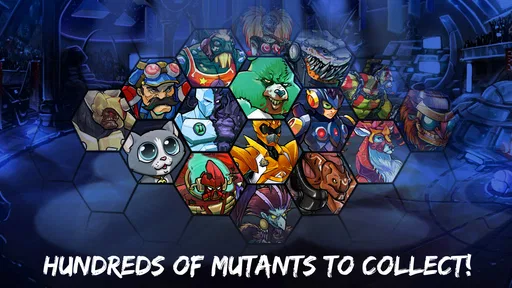
- Hundreds of mutants offer plenty of team-building combinations.
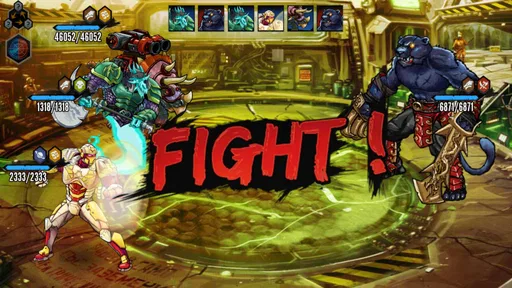
- Turn-based battles are easy to learn but reward tactical planning.
- Regular events provide extra objectives and limited-time rewards.
- The colorful comic-style presentation suits the game's lighthearted tone.
- PvP modes let you test squads against other players worldwide.
Limitations of Mutants Genetic Gladiators
- Progress can feel slow without spending premium currency.
- Energy limits may interrupt longer play sessions.
- Random summoning makes obtaining specific mutants unpredictable.
- Some battles become repetitive after the initial learning curve.
- An internet connection is required for most gameplay features.
Similar Picks in This Category
View All
Temple Run 2: Endless Escape
Imangi Studios4.1

PUBG MOBILE
Level Infinite4.3

Free Fire: 9th Anniversary
GARENA INTERNATIONAL I4.4

Talking Tom: Hero Dash Run
Outfit7 Limited4.3

slither.io
Lowtech Studios3.9

Sniper 3D:Gun Shooting Games
Wildlife Studios4.6
Frequently Asked Questions
What is Mutants: Genetic Gladiators?
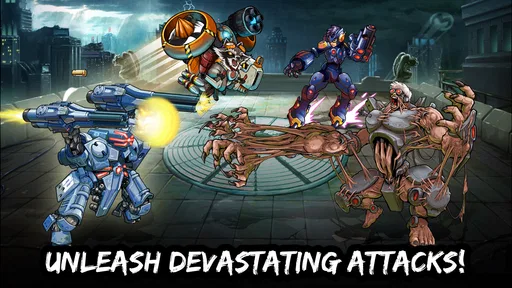
Mutants: Genetic Gladiators is a turn-based strategy and collection game in which you create a team of genetically engineered mutants and fight other squads in arena battles. Each mutant has different classes, abilities, and elemental strengths, so success depends on combining compatible fighters, upgrading them, and choosing attacks carefully rather than simply relying on the strongest-looking characters.
Is Mutants: Genetic Gladiators free to download and play?
Yes, Mutants: Genetic Gladiators can generally be downloaded and played for free on supported Android and iOS devices. However, the game includes optional in-app purchases for resources, upgrades, special offers, or faster progression. You can play without spending money, although advancing and collecting rare mutants may require more patience because energy systems, timers, and limited resources can slow progress.
Does the game require an internet connection?
An internet connection is normally required for the main experience because the game connects to online services for battles, events, account progress, rewards, and content updates. Offline access may be limited or unavailable, and playing with an unstable connection can interrupt matches or prevent rewards from being recorded correctly. A reliable Wi-Fi or mobile data connection is recommended.
How does combat and mutant breeding work?
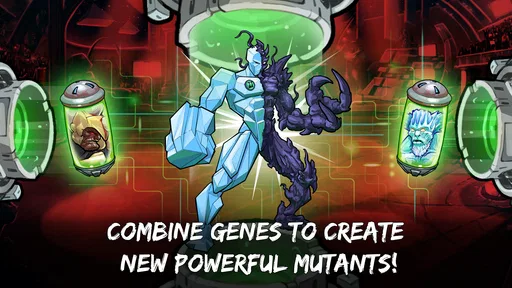
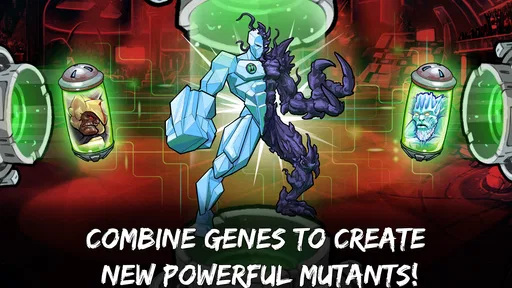
Combat uses turn-based team battles where you select attacks and exploit class or elemental advantages against opposing mutants. Building a balanced squad is important because every fighter has strengths and weaknesses. The game also includes a breeding or genetic system that lets you combine mutants to discover new creatures, improve your collection, and create teams suited to different opponents and game modes.
Is Mutants: Genetic Gladiators suitable for children?
The game is presented in a colorful, cartoon-style format, but parents should still review it before allowing younger children to play. It includes competitive battles, frequent progression mechanics, online features, and optional purchases. Depending on the platform and region, age ratings may differ. Parents should enable purchase restrictions, check privacy settings, and supervise online activity when necessary.
Play our best games!


